Could a Star be Powered by a Black Hole?
About this video
Recent discussions have highlighted the mysteries of supermassive black holes. These cosmic entities can have masses ranging from millions to billions of times that of the sun, with one at the center of our galaxy weighing approximately 4 million solar masses. The term "supermassive" distinguishes these black holes from stellar-mass ones, which are formed from stars and typically weigh between 3 and 200 solar masses. There's an apparent gap in size between these two classifications. These supermassive black holes are often found at the center of galaxies. The Milky Way's supermassive black hole, for instance, has an impressive mass but a compact size, with its diameter only able to fit about 17 suns.
The conundrum is that the universe doesn't appear to be old enough for any stellar-mass black holes to evolve into supermassive ones. The formation of black holes involves a delicate balance within active stars between gravity and radiation pressure. When a star's nuclear fuel ends, if it's large enough, its core collapses into a black hole, while the remaining energy results in a supernova.
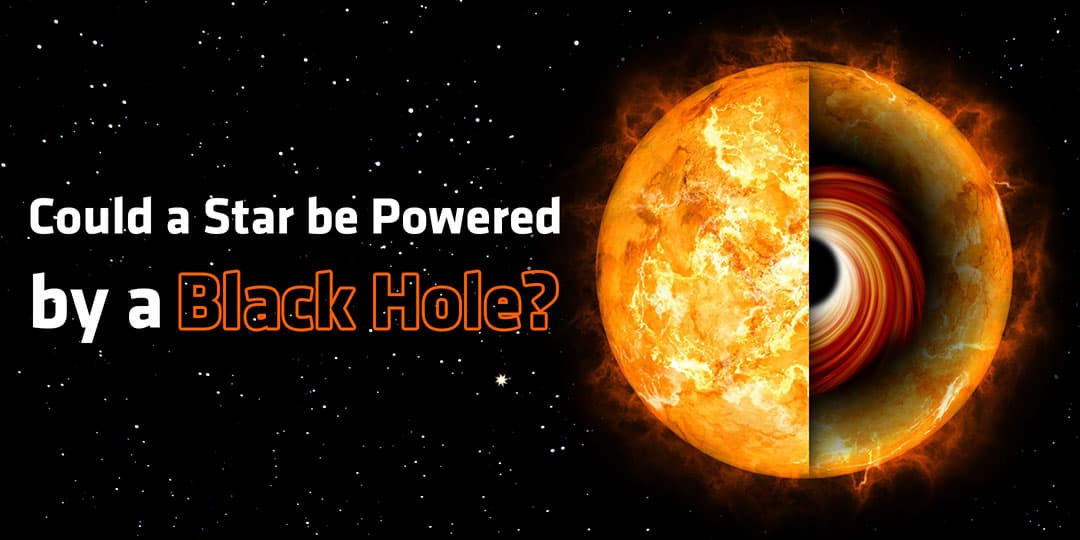
However, to make a black hole supermassive, the early universe would need conditions to produce stars with tens of thousands of solar masses at a time when star formation seemed impossible. The theory suggests that certain areas might have bypassed nuclear fusion and immediately formed small black holes, which then grew in size. These "quasi-stars" or "black hole stars" would have cores that are black holes. Over time, these cores could grow, merge with others, and eventually become the supermassive black holes we observe today.
Currently, our understanding of black holes' origins and properties is based on certain assumptions, as direct observations and measurements are challenging. The James Webb Space Telescope is anticipated to provide further insights into these cosmic mysteries. Astrophysics, by nature, is complex, and scientists continue to strive for clearer understanding.
Original source