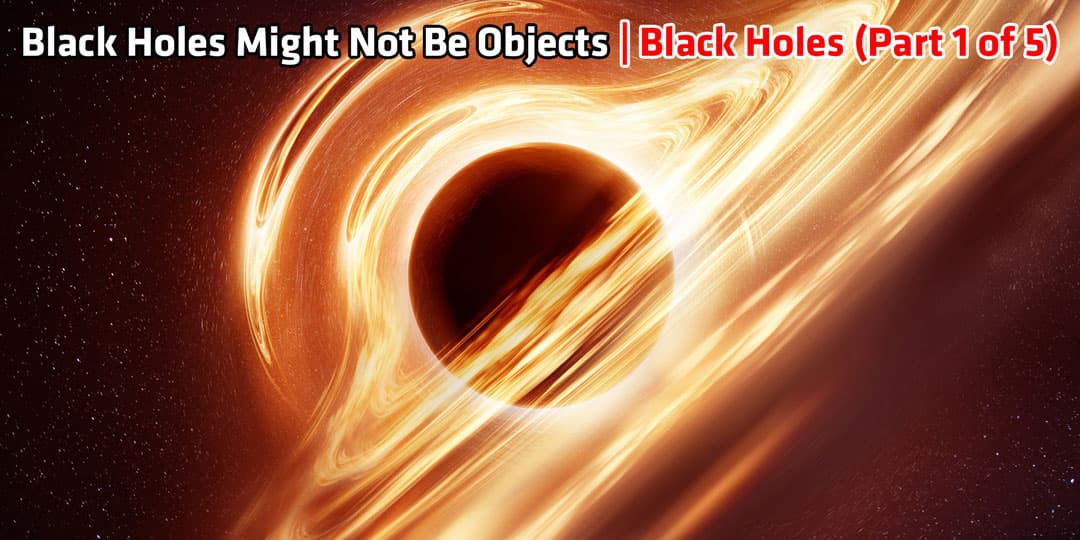
Black Holes Might Not Be Objects | Black Holes Part 1
About this video
The video you're interested in is titled "Black Holes Might Not Be Objects | Black Holes Part 1" by Astrum, published on January 15, 2022. It's an educational video that delves into the properties of black holes, making them bizarre and fascinating objects in space. Here's a summary of the key points:
1. **Nature of Black Holes**: Black holes are not actually objects but are the result of extreme warping of space-time. This warping leads to some strange phenomena around black holes.
2. **Sizes of Black Holes**: They vary in size, with the smallest observed black hole being around 3.8 solar masses, and the largest ones, existing since nearly the beginning of the universe, weighing billions of solar masses.
3. **Formation of Black Holes**: They are formed as the final stage in the life cycles of massive stars. The process involves the star balancing under the forces of gravity and the energy released from nuclear fusion. When a star starts fusing iron, it leads to a collapse, resulting in a supernova, and potentially, the formation of a black hole.
4. **Event Horizon**: The black sphere seen in images of black holes is the event horizon, not the black hole itself. The event horizon is the point where gravity is so strong that even light cannot escape.
5. **Impact on Space and Time**: Black holes affect both space and time. Inside the event horizon, space and time essentially cease to exist.
6. **Observation of Black Holes**: Initially, the existence of black holes was uncertain. The first evidence came with the discovery of Cygnus X-1 in 1964, an object emitting a large amount of x-rays but invisible in the visible spectrum.
7. **Accretion Disks and X-rays**: Black holes can be detected through the x-rays emitted from their accretion disks, where infalling matter gets heated to extreme temperatures.
8. **Future Research**: The field of black hole research is still developing, with many aspects yet to be understood, including the potential for black holes to lose mass and energy.
The video also discusses the theoretical aspects of black holes and quantum mechanics, hinting at the complex nature of these cosmic phenomena.
Original source