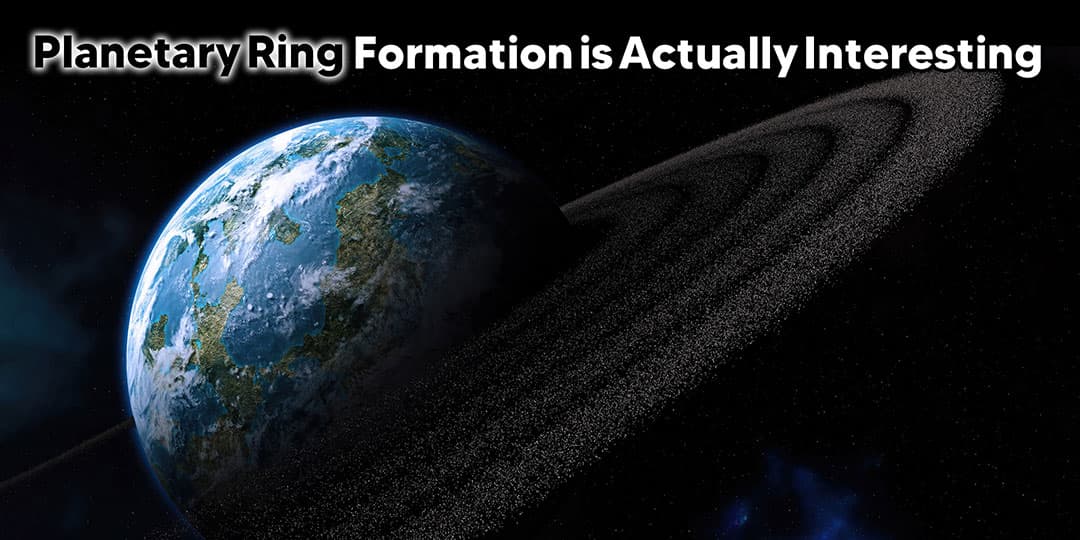
Planetary Ring Formation is Actually Interesting
About this video
This video is discussing the formation and characteristics of planetary rings, especially in our solar system and includes a lot of historical, astronomical, and scientific information, explained in a casual and engaging manner.
Origin of Planetary Rings:
The script explains that planetary rings can form from moons, comets, and asteroids that come too close to a planet and break apart due to tidal forces. This is related to the concept of the Roche limit, which is the minimum distance at which a celestial body, subject to tidal forces, will disintegrate due to tidal forces exceeding the body’s gravitational self-attraction. Inside the Roche limit, objects will tend to disintegrate and form rings.
Discoveries and Observations:
The script details the historical observations and discoveries of planetary rings, starting with Galileo’s observations of Saturn in 1610, moving to Huygens in 1655, and discussing the more recent discoveries of rings around other gas giants. It also mentions the potential for rings around smaller celestial bodies, like dwarf planets, and the possibility of Phobos (a moon of Mars) forming rings in the future.
Roche Limit and Formation of Moons vs Rings:
The script talks about the Roche limit, which is critical in determining whether an object will form rings or moons around a planet. The script provides the example of Earth's moon, which formed outside of Earth’s Roche limit and hence became a moon. If it had been within the Roche limit, it would have disintegrated to form rings.
Temporary Nature of Rings:
The script emphasizes that planetary rings are temporary and unstable, with Saturn’s rings being relatively young and expected to last only another 100 million years or so. It mentions that any rings that might have formed around Earth would have collapsed long before life evolved.
Original source